
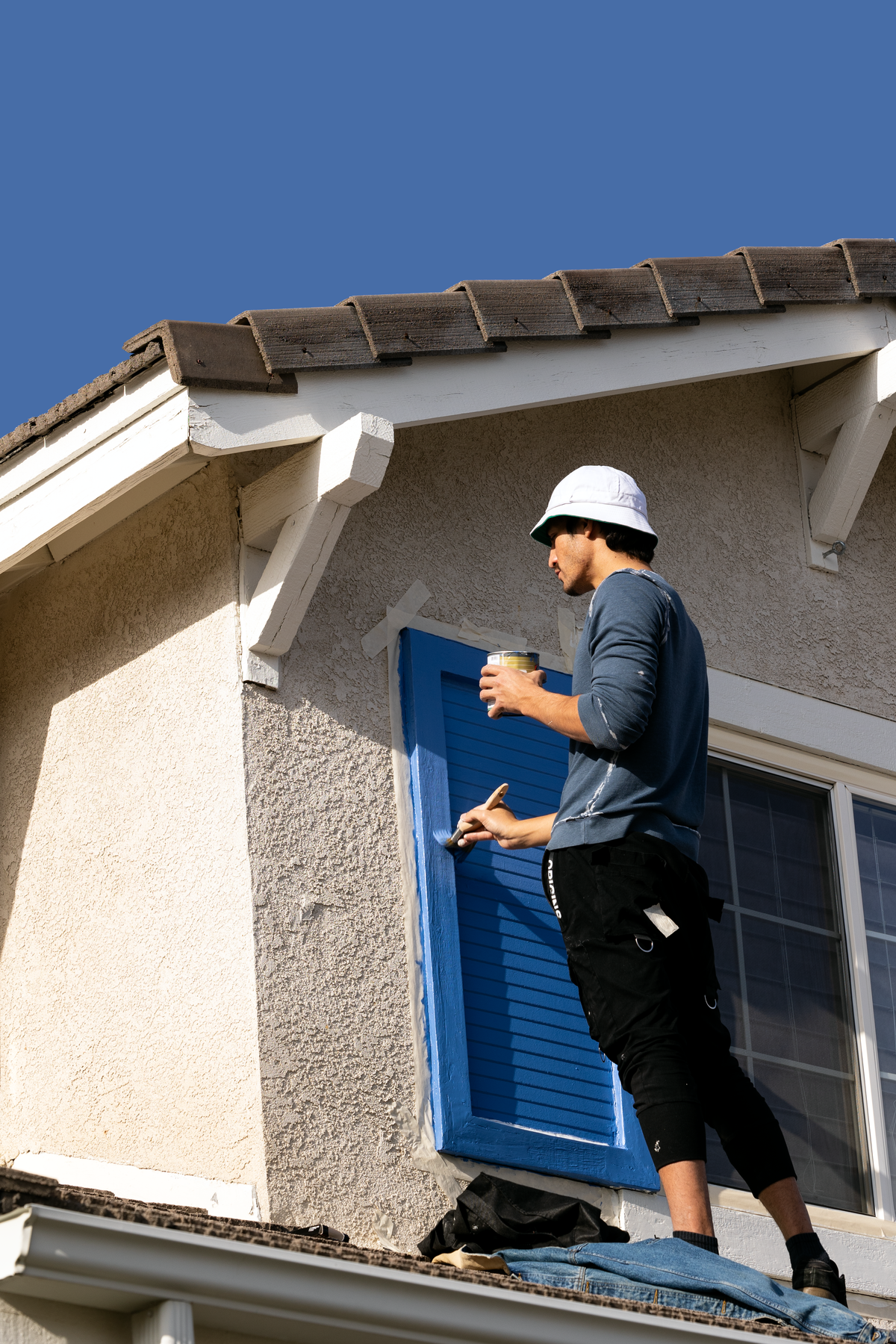
Your home exterior tells you when it needs paint. In South Florida, the most common signs are peeling paint, chalky walls, cracked caulk, and mildew. If you spot these in Wellington or elsewhere in Palm Beach County, it may be time to plan a repaint with our exterior painting team.
Paint does not last forever. Sun, rain, salt air, and humidity all wear it down over time. Some damage starts small and is easy to miss. This guide covers seven signs to watch for, so you can act before the problem reaches the wood and siding underneath.
1. Peeling or Bubbling Paint
Peeling is the clearest sign. Look for flakes, curls, or blisters on the surface. Bubbles often form when moisture gets trapped under the paint and pushes it off the wall. Peeling paint lets water reach the material beneath. That can lead to rot on wood trim and damage to stucco or siding. If the paint is lifting in more than a few spots, the surface needs attention soon.
2. Chalky Residue on the Walls
Chalk is the powder that comes off when you rub a painted wall. Try this test. Rub a dark cloth across the wall. If the cloth comes away with a light powder, the paint is breaking down. Chalking happens after years of sun exposure. Once the top layer wears away, the wall loses its protection. A fresh coat can restore the finish and seal the surface.
3. Cracked or Shrinking Caulk
Look at the caulk around windows, doors, and trim. Caulk that is cracked, pulled away, or hard and brittle is no longer doing its job. Gaps let water slip behind the trim. A good crew fixes the caulk before any new paint goes on. Sealing these gaps helps keep moisture out of the wall.
4. Fading and Dull Color
Strong Florida sun can fade paint quickly, especially on the sides of the house that face south or west. If one wall looks much lighter than the others, the sun has likely done its work. Faded paint may look fine from a distance, but it has lost much of its protection. A repaint brings back the color and gives the surface a new layer of defense.
5. Mildew and Dark Spots
Humidity and shade create the perfect conditions for mildew. Dark green, gray, or black spots often show up on north-facing walls, under eaves, and near sprinklers. Some spots can be cleaned away. But if mildew keeps coming back, the paint may have lost its ability to resist moisture. Repainting with the right product can help slow it down.
6. Bare Spots and Exposed Wood
Check for areas where the paint has worn all the way down to bare wood, stucco, or metal. These spots are open to the weather. Wood can soak up water and start to swell or crack. Metal can rust. Bare spots should be sanded or scraped, primed, and then painted. Waiting too long turns a small repair into a bigger job.
7. Swollen or Soft Trim
Press a screwdriver gently into your window sills, fascia boards, and door trim. If the wood feels soft or spongy, moisture has gotten inside. Paint failure is often the first step. Soft wood needs repair before any new paint goes on. A painter who spots this early can save you from a larger repair later.
Why Timing Matters in South Florida
Our weather is hard on exterior surfaces. Heavy rain, strong sun, and salty breezes near the coast all add stress. Many homeowners wait until the paint looks bad before they act. By then, the damage may already reach the wood or siding. Checking your home each season can help you catch problems early. Our guide on exterior painting and Florida weather explains how local conditions affect paint over time.
What to Do Next
Start with a walk around your home. Take photos of any problem areas so you can track changes. Note which sides of the house get the most sun and shade. Then reach out to a professional for a closer look. A trained eye can tell the difference between surface wear and deeper damage. We handle residential and commercial painting, along with cabinet and trim work.
What a Repaint Usually Includes
Every project is different. Still, most exterior repaints follow the same basic steps. The crew inspects the surface and repairs any damaged areas. Loose paint is scraped away. Caulk is replaced where needed. The surface is cleaned, primed where required, and then painted with exterior-grade paint. Careful prep helps the new finish last longer. Skipping prep is one of the most common reasons paint fails early.
Choosing the Right Time
Many homeowners wonder when to schedule a repaint. There is no single answer. The right time depends on the condition of your paint, the type of surface, and the weather during the job. Once you see two or more of the signs above, it is a good idea to get an estimate. Waiting often adds to the work. Acting early usually keeps the job simpler.
Serving Wellington and Palm Beach County
Art Lego LLC is based in Wellington, FL. We serve homeowners in West Palm Beach, Palm Beach Gardens, Boynton Beach, and North Palm Beach. We also work in St. Lucie County and Martin County. Whether your home is a small ranch or a larger two-story, the same signs apply. Look closely, act early, and plan your project with care.
If you see any of these signs on your home, Art Lego LLC can help. We offer free estimates for exterior painting across the area. Call 561-574-3769 to talk with our team and schedule a visit.
Frequently Asked Questions
How often should a home exterior be repainted in South Florida?
There is no fixed schedule. Paint condition matters more than age. Check your home each season. Plan a repaint when you see peeling, chalking, cracks, or bare spots.
Can I paint over mildew?
Mildew should be cleaned before painting. If you paint over it without cleaning, the spots can come back through the new coat. A good prep process removes mildew first.
What does chalky paint mean?
Chalky paint means the surface has broken down from sun and weather. Rub the wall with a dark cloth. If powder comes off, the paint needs a fresh coat of exterior paint to restore protection.